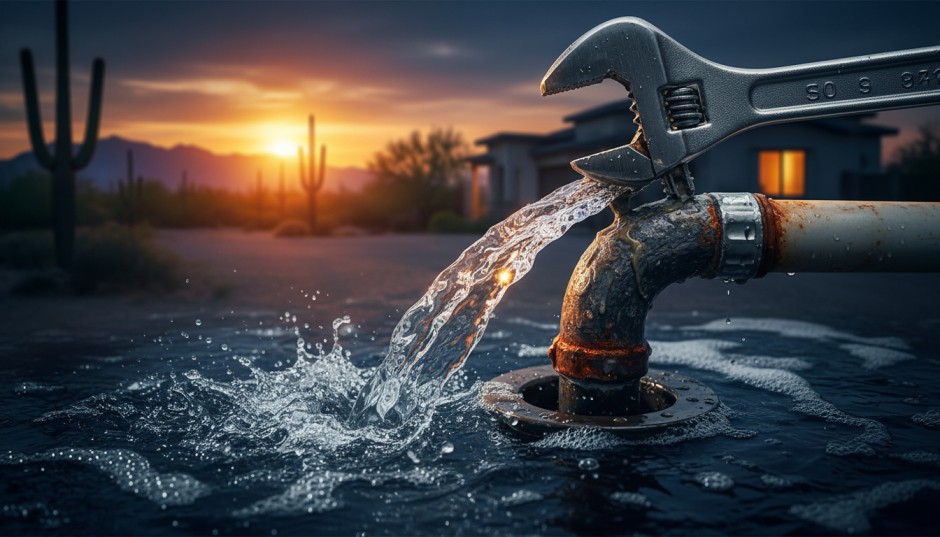
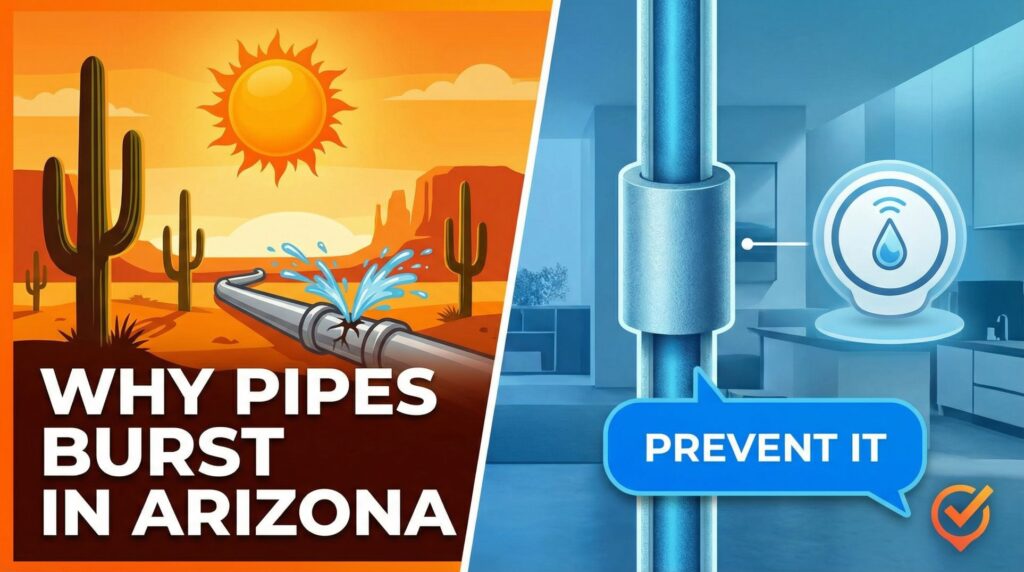
Why pipes burst in Arizona homes comes down to a mix of temperature swings, high water pressure, aging materials, and hard water, and most of these problems are preventable with a bit of planning and routine maintenance. Understanding what is happening inside your walls and yard helps you stop a small issue from turning into a flooded home and thousands in repairs.
How pipes actually burst
Even in a warm state, several forces push your plumbing to the breaking point.
-
Water expands when it freezes, which can split pipes or blow apart weak fittings when rare cold snaps hit overnight.
-
Daily temperature swings and hot water create expansion and contraction that fatigue pipe walls over years.
-
Excessive pressure (often above 80 psi) hammers fittings and weak spots until they fail suddenly.
-
Hard water in Arizona leaves mineral scale that narrows pipe openings and raises pressure inside the line.
Arizona‑specific stress on plumbing
Homes in the desert face unique conditions that many owners do not realize are hard on water lines.
-
Monsoon rains can rapidly saturate then dry out soil, causing ground movement that stresses buried pipes and slab lines.
-
Extremely hard water common in Arizona cities accelerates internal corrosion and scale buildup on older steel and copper lines.
-
Nighttime cold snaps in winter can drop temperatures low enough to freeze exposed or poorly insulated exterior pipes and hose bibbs.
Common causes inside Arizona homes
Several recurring patterns show up in burst‑pipe calls across the state.
-
Aging and corroded pipes: Older galvanized steel and thin‑walled copper become brittle and can split under normal household pressure.
-
Poor installation: Unsupported runs, loose joints, and amateur repairs create stress points that fail under temperature changes or minor pressure spikes.
-
Exposed locations: Pipes in exterior walls, attics, crawlspaces, and garages are the first to freeze or overheat during extreme weather.
Warning signs a pipe may fail
Catching early clues can save you from a middle‑of‑the‑night emergency and major water damage.
-
Sudden drop or surge in water pressure, or faucets that sputter when turned on, can signal obstructions or failing lines.
-
Unusual noises such as banging (water hammer), whistling, or popping in walls often indicate high pressure or movement in pipes.
-
Wet spots, stains on ceilings or walls, musty odors, or unexplained increases in your water bill usually point to hidden leaks that can worsen into bursts.
How to prevent burst pipes in Arizona
Smart prevention focuses on controlling temperature, pressure, and pipe condition.
-
Insulate exposed lines using foam sleeves or fiberglass wrap in attics, garages, and on exterior walls, and protect outdoor spigots.
-
Seal gaps around hose bibbs, wall penetrations, and foundation openings to keep cold air from hitting pipes directly during winter nights.
-
Have a professional install or check a pressure‑reducing valve and aim to keep household pressure near manufacturer recommendations.
Winter and cold‑snap precautions
Even “rare” freezes can cause extensive damage when homes are not prepared.
-
On nights with freeze warnings, let vulnerable faucets drip slowly to keep water moving and relieve pressure buildup.
-
Open cabinet doors under sinks on exterior walls so warmer indoor air can circulate around supply lines.
-
Disconnect garden hoses and use insulated covers on outdoor spigots before cold weather hits.
Everyday maintenance habits
Regular attention keeps your home’s plumbing strong, even with desert conditions and hard water.
-
Schedule periodic plumbing inspections to check for corrosion, weak joints, outdated materials, and early leaks before they escalate.
-
Flush water heaters and consider filtration or conditioning to reduce mineral buildup that stresses your plumbing system.
-
Avoid DIY hits to hidden pipes when drilling, cutting, or landscaping by locating lines before starting projects.
What to do if a pipe bursts
Knowing the first steps can significantly limit damage and repair costs.
-
Shut off the main water valve to your home immediately to stop the flow and reduce flooding.
-
Turn off electricity in affected areas if water reaches outlets, appliances, or the breaker panel to stay safe.
-
Document the damage with photos and contact a licensed plumber as soon as possible for emergency repairs and help with drying recommendations.
When to call a professional
Some warning signs and situations deserve urgent attention from a qualified plumbing expert.
-
Repeated low or high pressure readings, banging pipes, or recurring leaks indicate system‑wide issues that need professional diagnosis.
-
Older homes with original plumbing, visible corrosion, or past water‑damage events should have comprehensive inspections and updates planned.
-
Any suspected frozen pipe, active leak, or visible bulging in a pipe calls for immediate service to prevent a full rupture.
Local help for Arizona homeowners
Homeowners in the Valley benefit from working with a local plumber who understands desert construction practices, hard‑water problems, and seasonal risks specific to the region. A trusted local expert can recommend targeted upgrades, insulation, and pressure controls that fit both your neighborhood and your home’s age and layout.
For fast, local help with burst pipes, hidden leaks, or prevention planning anywhere in the area, contact AZ Emergency Plumbing at (480) 547-9517 for prompt, professional service from a team experienced with Arizona homes and conditions.