
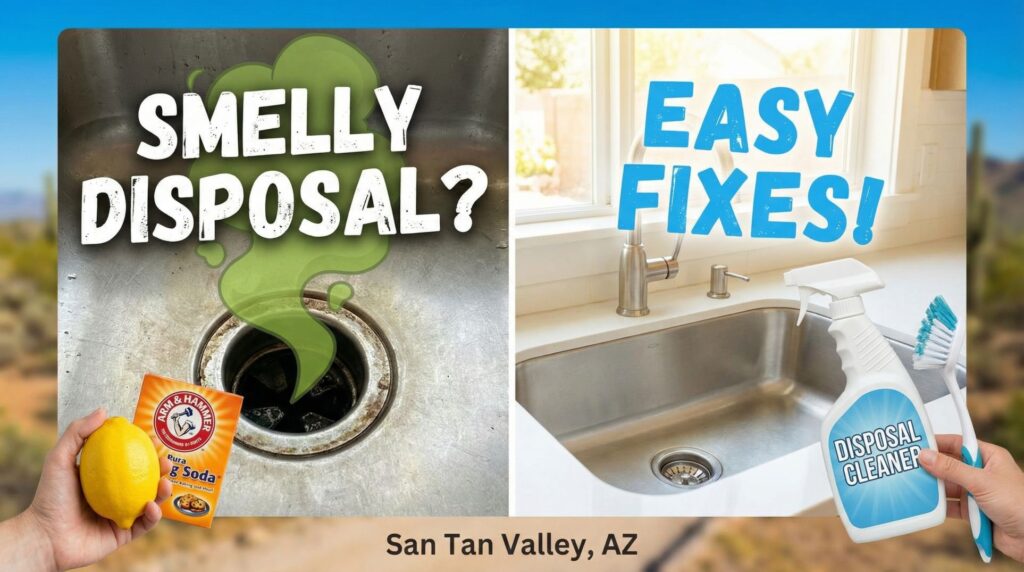
A foul odor wafting from your kitchen sink can turn everyday meal prep into a nightmare. In San Tan Valley homes, where busy families rely on garbage disposals to handle food scraps, these smells often stem from everyday use mixed with our desert climate’s unique challenges. That rotten egg or sewage stench isn’t just unpleasant—it’s a sign something needs attention.
Don’t worry; most causes are simple to diagnose and fix yourself. This guide breaks down why your garbage disposal smells, shares proven fixes, and offers prevention tips to keep your kitchen fresh. You’ll learn safe, effective steps that work for standard models from brands like InSinkErator or Waste King.
Common Reasons Your Garbage Disposal Develops Odors
Garbage disposals grind food into tiny bits for your plumbing to handle, but buildup leads to smells over time. Heat from our Arizona sun can make grease solidify slower, trapping bacteria.
1. Food Residue and Grease Buildup
The top culprit is leftover scraps clinging to the grind ring and impellers. Starchy foods like potatoes or pasta ferment quickly, creating a sour smell. Greasy items like bacon fat coat blades, turning rancid in warm conditions.
In San Tan Valley, where summer heat lingers into kitchens, this buildup accelerates. Bacteria thrive in moist, dark spaces under the sink, producing hydrogen sulfide—that classic “rotten egg” aroma.
2. Bacterial Growth in the Drain
Even if blades spin clean, bacteria colonize the drain pipe below. Organic matter decays anaerobically (without oxygen), releasing foul gases. This worsens if you pour coffee grounds or eggshells, which clump and block flow.
3. Clogged Splash Guard or Hose
The rubber splash guard at the top traps debris. If overlooked, it rots and smells. The drain hose under the sink can also harbor slime if not flushed regularly.
4. Rare but Serious Issues
A seized motor overheats and burns debris, or a leak introduces sewer gases. P-trap dryness from evaporation (common in dry AZ air) lets odors rise.
Quick Diagnostic Steps Before Fixing
Turn off power at the breaker for safety—never probe with water running.
-
Smell Test: Run cold water and listen. Gurgling? Bacteria in pipes.
-
Visual Check: Shine a flashlight inside. Visible gunk? Residue buildup.
-
Manual Spin: Use an Allen wrench in the hex hole at the bottom. Free spin means no jam; resistance signals blockage.
-
Reset Button: Press the red button under the unit. If it trips often, overload is likely.
These steps pinpoint 90% of issues without tools.
Step-by-Step Fixes to Eliminate Garbage Disposal Odors
Tackle smells with household items first. Most fixes take under 30 minutes.
Fix 1: Ice and Lemon Cube Cleanse (5 Minutes)
Hard ice cubes dislodge residue; lemons neutralize odors naturally.
Steps:
-
Fill sink halfway with ice.
-
Add half a lemon, cut into chunks.
-
Run disposal with cold water for 30 seconds.
-
Repeat if needed.
This DIY method polishes blades and leaves a citrus scent. Use weekly for maintenance.
Fix 2: Baking Soda and Vinegar Blast (10 Minutes)
The fizzing reaction breaks down grease and kills bacteria.
Steps:
-
Pour ½ cup baking soda into disposal.
-
Add 1 cup white vinegar—watch it foam.
-
Let sit 5-10 minutes.
-
Flush with boiling water (if pipes allow; check manual).
Effective for mild buildup. Vinegar’s acidity dissolves starch without harsh chemicals.
Fix 3: Deep Clean the Splash Guard and Drain
Odors hide here.
Steps:
-
Remove splash guard (twist or pry gently).
-
Scrub with old toothbrush and dish soap.
-
Soak in vinegar solution 15 minutes.
-
Rinse and reinstall.
-
For drain: Plunge with 1 cup salt + hot water.
Fix 4: Enzyme Cleaner for Stubborn Bacteria
Natural enzymes eat organic matter.
-
Buy septic-safe packets (e.g., Bio-Clean).
-
Drop one in at night; run water morning.
-
Avoid bleach—it damages rubber parts.
Fix 5: Flush the P-Trap and Hose
Sewer smells? Check below.
Steps:
-
Place bucket under U-bend.
-
Unscrew slip nuts; clean trap.
-
Run plumber’s snake through hose if slimey.
-
Reassemble tightly.
If rusty water appears, mineral buildup from hard San Tan Valley water is at play—consider a softener.
When DIY Won’t Cut It: Professional Signs
Call a pro if:
-
Disposal hums but doesn’t grind (jammed impeller).
-
Persistent smell after cleaning (leaking seals).
-
Water backs up in sink (clog beyond unit).
-
Unit is 10+ years old (lifespan average).
Replacement costs $200-500 installed, cheaper than flood damage.
Prevention Tips for Odor-Free Kitchens Year-Round
Prevent smells with habits suited to AZ homes.
-
Run Cold Water Always: Hot water melts grease, letting it stick.
-
Grind Smart: Avoid fibrous (celery), starchy, or oily foods. Cut scraps small.
-
Weekly Maintenance: Ice + citrus routine.
-
Monthly Deep Clean: Baking soda/vinegar.
-
Use Disposal Sparingly: Compost scraps instead.
-
Check Dry P-Trap: Pour water monthly.
| Prevention Method | Frequency | Time Needed | Why It Works |
|---|---|---|---|
| Ice/Lemon Cleanse | Weekly | 5 min | Scrapes blades, deodorizes |
| Baking Soda/Vinegar | Monthly | 10 min | Dissolves grease, kills germs |
| Compost Use | Daily | N/A | Reduces load by 50% |
| P-Trap Water | Monthly | 1 min | Blocks sewer gases |
Why San Tan Valley Homes Face Unique Challenges
Our high desert climate dries traps faster, and hard water leaves deposits. Summer monsoons bring humidity spikes, boosting bacteria. Local citrus farms mean more peels in disposals—great for cleaning but messy if overdone.
Stay ahead by monitoring during peak heat.
Long-Term Solutions for Lasting Freshness
Upgrade to batch-feed models (manual activation) for less overuse. Install a disposal air switch for easy reset. For eco-conscious homes, add a sink strainer.
In extreme cases, whole-sink deodorizers attach externally.