Tankless Water Heater vs Traditional: What Works Best for San Tan Valley Homes?
When it comes to reliable hot water, homeowners in San Tan Valley face the important decision of choosing between tankless and traditional water heaters. The right choice impacts your home’s comfort, efficiency, and even monthly expenses. Understanding the differences can help you make the smartest investment for your family.
Understanding Your Options: Tankless and Traditional Water Heaters
Before comparing, it’s essential to know how each system operates:
-
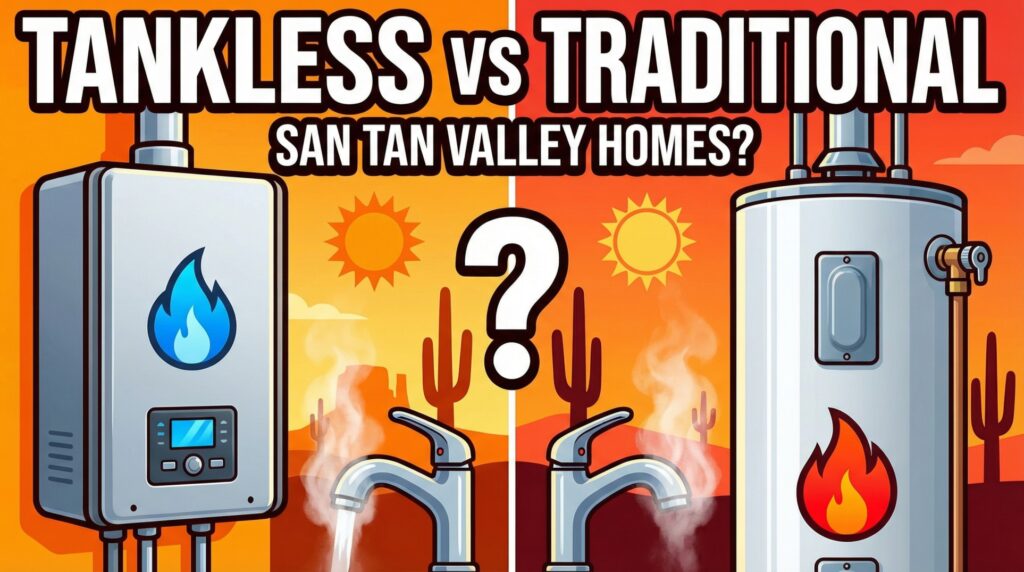
Traditional Water Heaters: These units, also known as storage tank water heaters, maintain a large reservoir of heated water, typically ranging from 30 to 50 gallons. Powered by gas or electricity, they cycle on and off throughout the day to keep water at a set temperature.
-
Tankless Water Heaters: Sometimes called on-demand or instantaneous water heaters, these compact systems heat water as it’s needed. Water passes through heating elements or burners only when you turn on the tap, eliminating standby energy usage.
Both systems provide hot water, but their performance, installation requirements, and long-term costs can differ greatly.
Key Factors for San Tan Valley Homeowners
San Tan Valley’s unique climate and water usage patterns should influence your decision. Consider these crucial factors:
-
Water Hardness: The region often experiences hard water, which can lead to mineral buildup that affects heater lifespan.
-
Home Size: The number of bathrooms and fixtures can affect your hot water needs.
-
Household Habits: Larger families or simultaneous use (showers, laundry, dishwasher) increase demand.
-
Energy Costs: Rising energy prices can impact the long-term savings.
Let’s break down the areas that matter most.
Comparing Lifespan and Durability
Traditional Water Heater: These units typically last 8 to 12 years. The tank’s exposure to constant heat and mineral sediment, especially in hard water areas like San Tan Valley, means regular maintenance is essential to avoid leaks and rust.
Tankless Water Heater: Tankless models have a longer expected lifespan, often 20 years or more. Because there’s no standing water, there’s less risk of corrosion or sediment buildup. Regular descaling is needed, but overall, you can expect more years of reliable performance.
Bottom Line: If long-term durability is a priority, tankless has the advantage.
Hot Water Availability: Which System Keeps Up?
Traditional Tanks: A standard tank delivers a finite supply of hot water at any given moment. If your household members take back-to-back showers or run several hot water appliances simultaneously, you may run out and have to wait for the tank to reheat.
Tankless Heaters: With the right size unit, a tankless system supplies an endless stream of hot water—perfect for big families or homes with high demand. However, the key word is properly sized: an undersized unit might struggle to keep up if multiple outlets run at once.
Practical Tip: For homes with frequent simultaneous hot water use, consult a professional to determine flow rate and choose a tankless model that fits your needs.
Energy Efficiency and Monthly Savings
Traditional System: Tanks cycle on and off, using energy to maintain the water temperature 24/7—even when you’re not using hot water. This “standby loss” means wasted energy over time.
Tankless Units: Heats water only when needed, leading to lower utility bills. Over the years, these savings can offset the higher initial purchase and installation cost.
Expert Insight: According to the U.S. Department of Energy, tankless water heaters can be 24%–34% more efficient for homes using less than 41 gallons of hot water daily. Even in higher-use households, efficiency gains remain significant.
Installation: Cost, Complexity, and Space Requirements
Traditional Tank: Installation is generally less expensive and straightforward. Tanks require dedicated space—often in a garage, basement, or utility closet. Replacing a similar unit often means minimal disruption.
Tankless Heater: This option comes with higher upfront equipment costs and possible upgrade expenses. Tankless units require venting, and if switching from electric to gas (or vice versa), additional changes may be needed. That said, they’re compact enough to mount on a wall, saving valuable floor space.
San Tan Valley Consideration: For homes with limited space or renovations planned, tankless heaters offer flexibility. For older homes with existing tank setups, sticking to a traditional tank may be the path of least resistance.
Maintenance and Long-Term Reliability
Traditional Tanks: Annual flushing is a must, especially in hard water regions. Neglecting this can lead to sediment buildup, cloudiness, and eventual tank failure.
Tankless Systems: Require annual descaling and regular cleaning of inlet screens. Although maintenance still matters, it’s generally less intensive.
Local Note: Hard water is common in San Tan Valley. Installing a water softener or scheduling regular maintenance increases the life and performance of both systems.
Environmental Considerations
Tankless technology is often touted as the greener choice due to lower energy consumption and, in many cases, lower greenhouse gas emissions if gas-fueled.
Traditional heaters, due to standby heat loss, contribute more to energy usage over time. However, efficient gas or hybrid electric tanks are available and may provide a good middle ground, especially for those not prepared to invest in a whole-home tankless upgrade.
Upfront Cost vs. Long-Term Investment
Traditional Water Heater: Lower initial cost—both the unit and labor. For homeowners on a tight budget or those planning to move within the next few years, this can be attractive.
Tankless Water Heater: While upfront expenses are higher, lower utility bills and longer lifespan mean greater savings over the unit’s lifetime. Rebates or incentives from local utilities might be available, helping ease the investment.
Common Myths Busted
-
Myth: “Tankless always provides unlimited hot water.” Fact: Only if the unit is sized to your home’s needs. Insufficient capacity leads to a drop in performance.
-
Myth: “Traditional heaters are outdated.” Fact: Modern tank designs are more efficient and meet today’s safety and performance standards.
-
Myth: “Switching to tankless is always simple.” Fact: Home upgrades may be needed, which can affect installation costs and timeline.
Making the Right Choice for Your Home
Choosing “the best” option depends on your household’s habits, space, budget, and long-term plans. Ask yourself:
-
How often does your family run out of hot water?
-
Are you looking to lower monthly energy bills?
-
Is your home ready for a new unit, or would switching cause renovation headaches?
-
Do you plan to stay long enough to see benefits from a long-life system?
To answer these fully, consulting with a licensed, local professional provides clarity.
Real-Life Scenarios: What Do San Tan Valley Homeowners Prefer?
Scenario 1: A family of five in a two-story home, who often run showers, dishwasher, and laundry at once, may benefit from a properly sized tankless unit—or even more than one in parallel to keep up with demand.
Scenario 2: Empty nesters in a smaller house, who use hot water mainly for showers and hand washing, may find a modern, high-efficiency traditional tank or a single mid-capacity tankless heater more than sufficient.
Scenario 3: A family with plans to sell soon may stick with a tank replacement to keep upfront costs low and improve home value with a newer unit.
Why Proper Sizing and Local Expertise Matter
No two homes are alike. Water quality, pipe layout, age, and even habits like soaking in the tub versus quick showers can impact performance. An installation that works perfectly for one home may be inadequate for another.
Choosing an experienced, locally-based professional ensures:
-
Accurate water flow calculations for your home’s unique needs.
-
Recommendations based on San Tan Valley water quality and climate.
-
Guidance on rebate options or energy-saving programs.
-
Seamless installation and support if any issues arise.
The Clear Winner: It Depends on YOUR Needs
Both tankless and traditional water heaters offer advantages for San Tan Valley homeowners. Ultimately, your decision should balance immediate needs, long-term savings, and the unique characteristics of your home.
For those who want the convenience of endless hot water and superior efficiency—and are ready for a bigger investment—tankless is a strong choice. For those seeking lower initial costs and straightforward replacement, traditional tanks remain a reliable, effective solution.
Remember, skipping regular maintenance shortens the lifespan and decreases the performance of any system.
Your Local Choice: AZ Emergency Plumbing
Ready to upgrade or have questions about your next water heater? Trust your home’s comfort to “AZ Emergency Plumbing”—your neighborhood experts. With years of experience serving San Tan Valley and surrounding communities, our team can help you weigh the benefits, size your system properly, and provide seamless installation.
For honest advice and plumbing services you can trust, call AZ Emergency Plumbing at (480) 547-9517. Get the perfect water heater for your home—call today for a consultation or to schedule fast, friendly service!