How to Detect a Hidden Water Leak in Your San Tan Valley Home
Hidden water leaks are one of the most expensive and stressful problems a homeowner can face in San Tan Valley. Because many leaks start small and stay out of sight, you often do not notice them until you see damage, mold, or a huge spike in your water bill.
In our desert climate, water is too valuable to waste—and moisture inside walls or under slabs can quickly turn into a serious repair. This guide walks you step by step through how to spot the signs of a hidden leak, what to check yourself, and when it is time to call a professional plumber.
Why Hidden Leaks Are So Dangerous
A slow, hidden leak may not seem urgent, but it can cause several serious issues over time:
-
Structural damage to walls, floors, and foundations.
-
Mold and mildew growth that can affect your health.
-
Higher water bills month after month.
-
Damage to cabinets, furniture, and flooring.
-
Reduced home value if issues are not repaired properly.
In San Tan Valley, many homes have slab foundations and complex plumbing routed through concrete and walls. That means leaks can stay concealed for months while water quietly damages your home from the inside out.
Early Warning Signs of a Hidden Water Leak
You do not need to see water pouring out to have a leak. In fact, most hidden leaks start with subtle clues. Watch for these common warning signs around your home.
1. Unexplained increase in your water bill
If your water usage jumps suddenly but your lifestyle has not changed, that is a strong hint something is wrong. Compare your current bill with the last three to six months. A steady increase or a sudden spike usually means:
-
A running toilet.
-
A hidden pipe leak.
-
A slab leak under your home.
If your bill is climbing and you cannot explain why, it is time to investigate further.
2. Constant sound of running or trickling water
When the house is quiet, do you hear a faint hissing, dripping, or flowing sound inside walls or floors? Turn off:
-
All faucets.
-
Showers.
-
Washing machine and dishwasher.
-
Sprinklers and irrigation.
Then walk around and listen carefully, especially near bathrooms, the kitchen, and laundry room. Hearing water move when everything is off is a strong sign of a hidden leak.
3. Damp, warm, or soft spots on floors and walls
Pay close attention to:
-
Soft or spongy spots on wood or laminate flooring.
-
Areas of carpet that feel damp or warmer than the rest of the room.
-
Drywall that is bubbling, warping, or discolored.
Warm spots on the floor can point to a hot water line leak, especially if you have a slab foundation.
4. Stains, discoloration, or bubbling paint
Hidden water often leaves visual clues:
-
Yellow, brown, or dark spots on ceilings or walls.
-
Peeling, cracking, or bubbling paint.
-
Wallpaper separating from the wall.
These spots may appear below a bathroom, near a shower, or under a second-floor laundry room.
5. Musty or moldy odors
If you notice a persistent musty smell that does not go away with cleaning, it may mean moisture is trapped behind a wall or under flooring. Mold and mildew thrive in damp, dark areas:
-
Behind baseboards.
-
Under cabinets.
-
Behind shower walls.
-
Under carpets and padding.
Even if you cannot see visible mold, the smell alone is reason to investigate further.
6. Mold or mildew appearing in unusual places
Some mold in a shower is normal, but mold on walls or ceilings in dry areas is not. Look for:
-
Dark specks or patches on walls, ceilings, or baseboards.
-
Growth around window frames or under sinks.
This often means water is present where it should not be.
7. Cracks in foundation or walls
Extensive or growing cracks can sometimes be related to long-term water damage from leaks under or around your foundation. While not every crack means a leak, it is worth checking if you also notice higher bills or damp areas.
How to Do a Simple Home Leak Check
If you suspect a hidden leak, you can perform a few simple tests before calling a plumber. These steps do not require any special tools and can quickly confirm whether water is escaping somewhere.
Step 1: Use your water meter
Your water meter is one of the most powerful tools you have for detecting leaks.
-
Turn off all water-using fixtures inside and outside your home.
-
Make sure no one uses toilets, showers, faucets, or appliances during the test.
-
Locate your water meter (usually in a ground box near the street).
-
Check the small leak indicator on the meter. This is often a small dial or triangle that spins when even a tiny amount of water flows.
-
If the leak indicator is spinning when all water is off, there is a leak somewhere in your plumbing system.
-
If your meter does not have a leak indicator, note the reading, wait 30–60 minutes without using any water, then check again. A change in the reading means water is flowing somewhere it should not be.
Step 2: Isolate the problem – house vs. yard
To narrow down where the leak is:
-
Turn off the main shutoff valve to your house (this is usually near an outside wall or where the water line enters the home).
-
Repeat the meter test.
-
If the meter stops moving when the house valve is off, the leak is inside your home.
-
If the meter continues to move, the leak is likely in the service line between the meter and the house, or in an outside irrigation system.
This helps a professional plumber know where to focus when they arrive.
Step 3: Check toilets for silent leaks
Toilets are one of the most common sources of hidden water waste.
-
Remove the tank lid.
-
Add a few drops of food coloring or a leak-detection tablet to the tank water.
-
Wait 15–20 minutes without flushing.
If colored water appears in the toilet bowl, the flapper or other parts inside the tank are leaking. This may not cause visible damage but can dramatically increase your water bill.
Step 4: Inspect fixtures and visible pipes
Walk through your home and check:
-
Under-sink cabinets for dampness, stains, or warped wood.
-
Around water heater base for rust or pooled water.
-
Around washing machine valves and hoses for drips.
-
Around refrigerator water line connections for moisture.
-
Under and around bathtubs and showers for soft floors or stains.
Any moisture, corrosion, or mineral deposits around connections can indicate a slow leak.
Common Hidden Leak Locations in San Tan Valley Homes
Homes in San Tan Valley often share certain plumbing layouts and materials, which means there are several common areas where hidden leaks tend to appear.
Slab leaks under your foundation
A slab leak occurs when a water line running under the concrete foundation develops a crack or hole. Signs of a possible slab leak include:
-
Warm or damp spots on the floor.
-
Cracks in flooring or baseboards.
-
Unexplained increase in water usage.
-
Sound of water running when everything is off.
Slab leaks require specialized equipment to locate and repair correctly. Leaving them untreated can cause serious foundation damage over time.
Leaks inside walls
Pipes inside walls can develop leaks due to age, poor installation, or water pressure issues. Clues include:
-
Stains on walls or ceilings.
-
Bubbling or peeling paint.
-
Warped drywall.
-
Musty smells in specific areas.
These leaks often stay hidden until the damage becomes very noticeable, so early detection is important.
Bathroom plumbing leaks
Bathrooms use a lot of water and have many potential problem spots:
-
Shower valves and pipes behind the wall.
-
Tub drains and overflows.
-
Toilet supply lines and wax rings.
-
Sink drains and supply lines.
Look for dampness around the base of toilets, loose tiles near showers or tubs, or water stains on the ceiling below upstairs bathrooms.
Kitchen and laundry leaks
In these areas, focus on:
-
Sink supply and drain connections.
-
Dishwasher water lines and drain hoses.
-
Refrigerator water lines.
-
Washing machine connections and hoses.
Because cabinets and appliances hide many of these connections, leaks can go unnoticed for a long time.
Professional Methods for Finding Hidden Water Leaks
While homeowners can perform basic checks, fully pinpointing a hidden leak often requires professional tools and expertise. A trained plumber can use:
-
Acoustic leak detection equipment to listen for leaks inside walls, ceilings, and slabs.
-
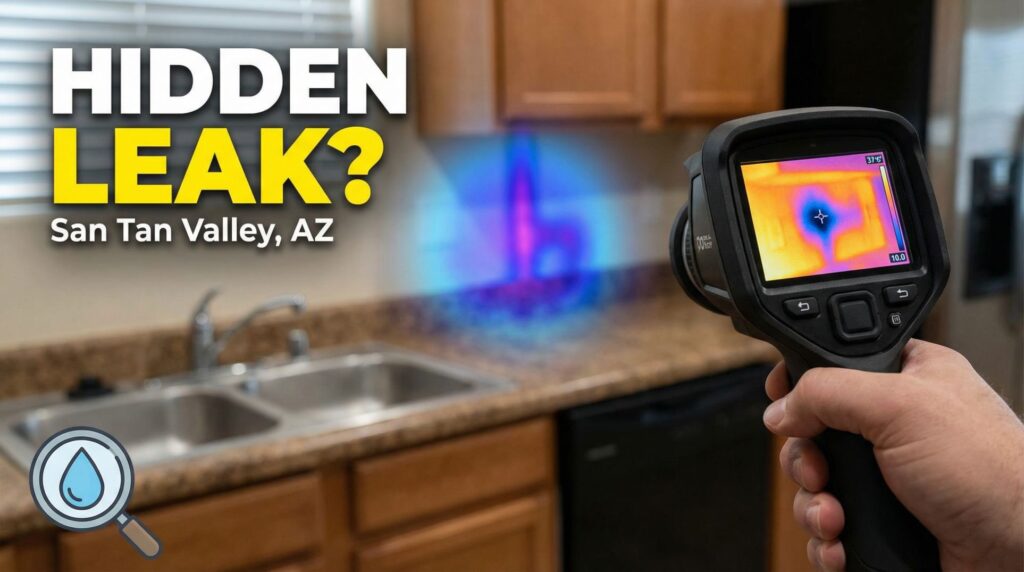
Thermal imaging cameras to detect temperature changes caused by hidden moisture and hot water leaks.
-
Moisture meters to measure water content inside building materials.
-
Camera inspections inside pipes to find cracks, breaks, or corrosion.
These methods allow accurate detection without unnecessary cutting into walls or floors, saving time and money in the long run.
Why You Should Not Ignore a Suspected Leak
It is tempting to ignore a small sign and hope it goes away, especially if you do not see active water. However, delaying leak detection and repair can lead to:
-
Higher repair costs as damage spreads.
-
Mold growth that requires professional remediation.
-
Ruined flooring, cabinets, and drywall.
-
Damage to your home’s structure and foundation.
-
Health issues from mold spores and damp conditions.
Even if you are not sure you have a leak, getting a professional inspection can give you peace of mind and potentially save thousands of dollars in future repairs.
Preventing Future Hidden Leaks
You can reduce the risk of future leaks and catch them earlier with a few simple habits:
-
Monitor your water bill each month for unusual changes.
-
Inspect under sinks and around water heaters regularly.
-
Replace old washing machine hoses with braided stainless steel lines.
-
Fix small drips and running toilets promptly.
-
Schedule periodic plumbing inspections, especially in older homes.
In an area like San Tan Valley, where hard water can be tough on pipes and fixtures, routine maintenance is especially important.
When to Call a Professional Plumber in San Tan Valley
You should reach out to a professional plumber if:
-
Your water meter shows usage when all fixtures are off.
-
You notice warm spots on the floor or unexplained dampness.
-
Your water bill has increased significantly without any clear reason.
-
You see stains, bubbling paint, or mold on walls or ceilings.
-
You suspect a slab leak or a leak inside a wall.
Trying to open walls or concrete without proper equipment and experience can lead to more damage and higher costs. A qualified plumbing expert can locate and repair leaks with minimal disruption.
Local Help for Hidden Leaks: AZ Emergency Plumbing
If you live in San Tan Valley and think you might have a hidden water leak, professional help is close by.
AZ Emergency Plumbing specializes in detecting and repairing hidden leaks, including slab leaks, in-wall leaks, and difficult-to-find plumbing problems. We understand local home construction, water conditions, and common problem areas in this region, which allows us to quickly identify the source of your issue and recommend the best repair options.
You can contact AZ Emergency Plumbing at (480) 547-9517 for:
-
Fast leak detection in San Tan Valley homes.
-
Honest, clear explanations of what we find.
-
Repair options tailored to your home and budget.
If you have noticed higher water bills, damp spots, or any of the warning signs in this guide, do not wait for the damage to get worse. Call (480) 547-9517 today and let AZ Emergency Plumbing help protect your San Tan Valley home from hidden water leaks.